

All about Sunflowers
How To Tell When a Sunflower Is Ready To Harvest
All About False Sunflowers
My Playlist
Ornamental Grasses: Fountain Grass
Introduction
Gardening is a rewarding activity that involves an understanding of your regional climate and soil. In the northeastern United States, adding ornamental grasses to your garden can offer a unique aesthetic appeal. This article will discuss one of the most popular of these grasses….Fountain Grass
Pennisetum alopecuroides ‘Little Bunny’
Little Bunny Fountain Grass
Little Bunny Fountain Grass, Pennisetum alopecuroides ‘Little Bunny’, is a mini form of Fountain Grass at only 12 inches tall and a welcome variety to those with small beds, court yards and rock gardens. Near the end of summer, fluffy cream-white plumes will pop above green foliage. Soon the undergrowth turns to gold for a beautiful autumn show. Feel free to use Little Bunny Fountain Grass in containers or for cut flower arrangements. It will grow in full to part sun and will adapt to a variety of soil conditions as long as it remains well drained.
Little Bunny is the smallest sized Fountain Grass and grows to 10 to 12 inches tall and wide. It likes full sun and blooms from late summer through fall.
Little Bunny is one of the variety of Fountain Grass that you can grow among the flowers in your garden because it will not block the sun.
It is deer resistant and is not toxic. It is a very healthy plant to grow.
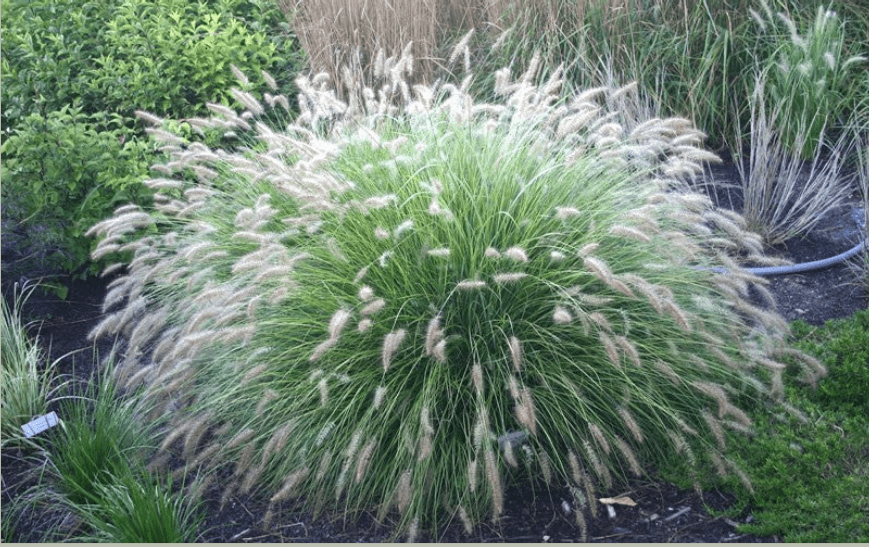

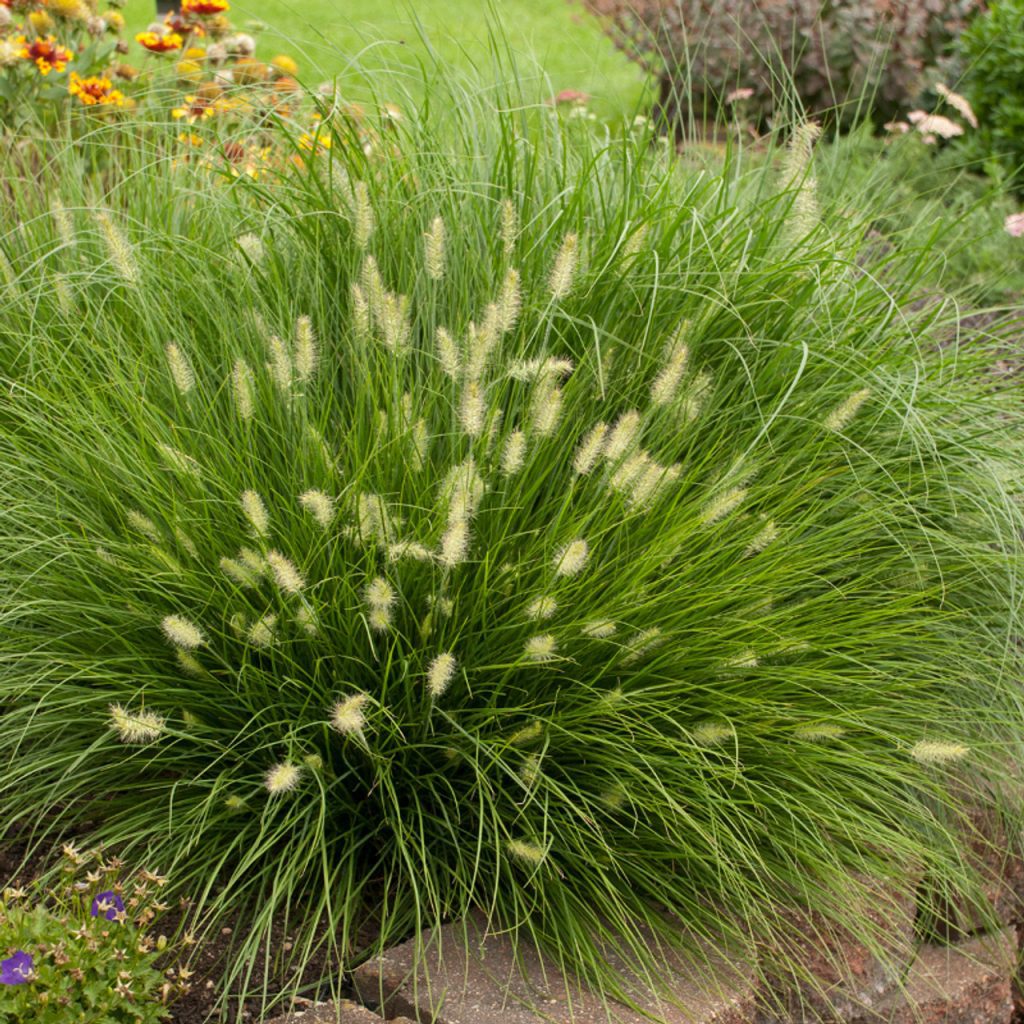
Little Honey is a smaller version of Little Bunny Fountain Grass. It grows to a height of 6 to 12 inches.
Pennisetum alopecuroides ‘Hameln’
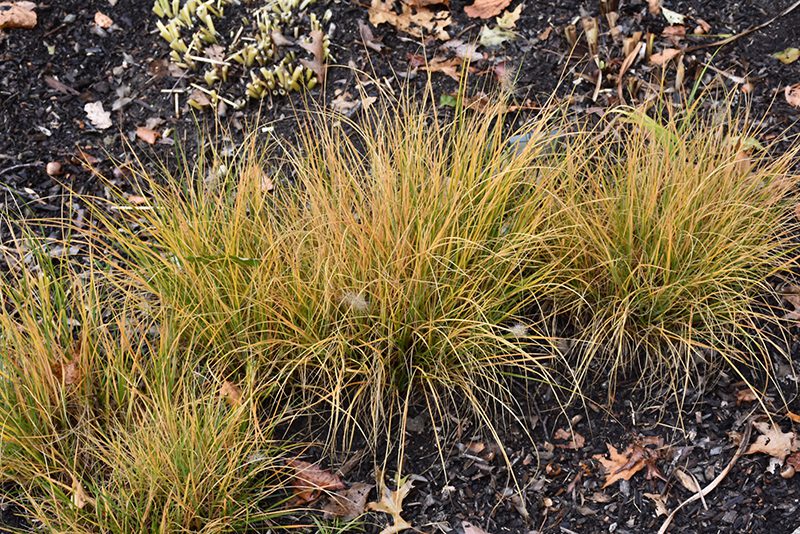
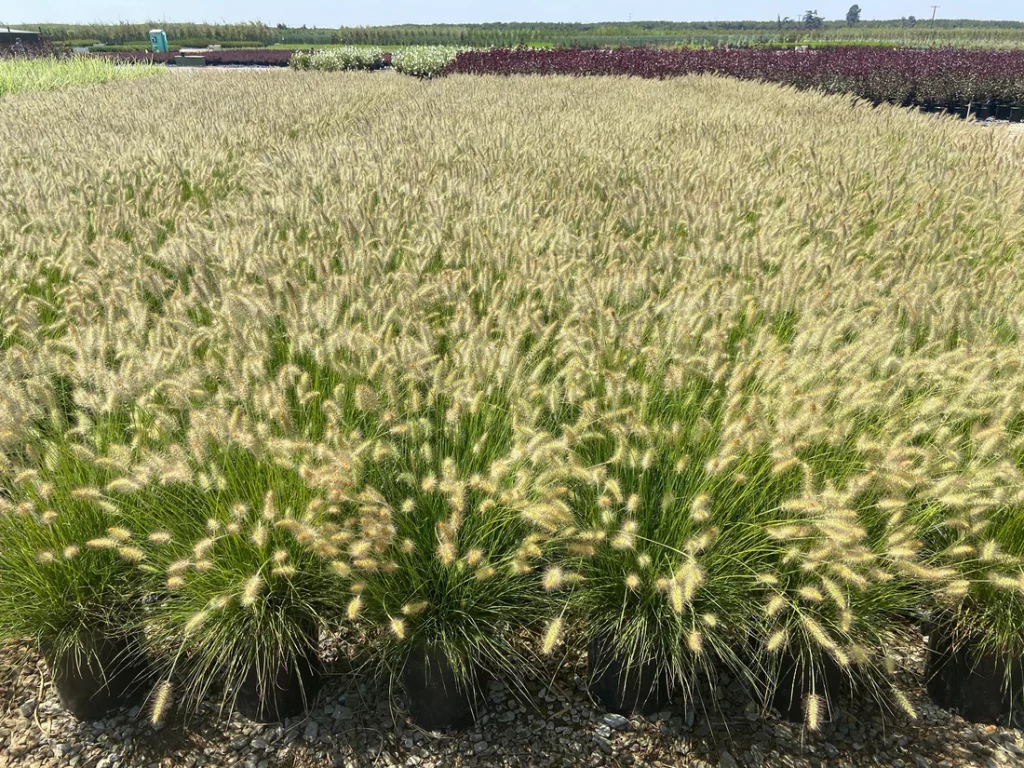
Pennisetum alopecuroides ‘Hameln’, also known as Dwarf Fountain Grass grows to 1 to 2 feet with a spread of 12 to 18 inches. It requires full sun and well drained soil. Its flower color is yellow and the foliage is green. Pollinators couldn’t care less about it and it is deer resistant.
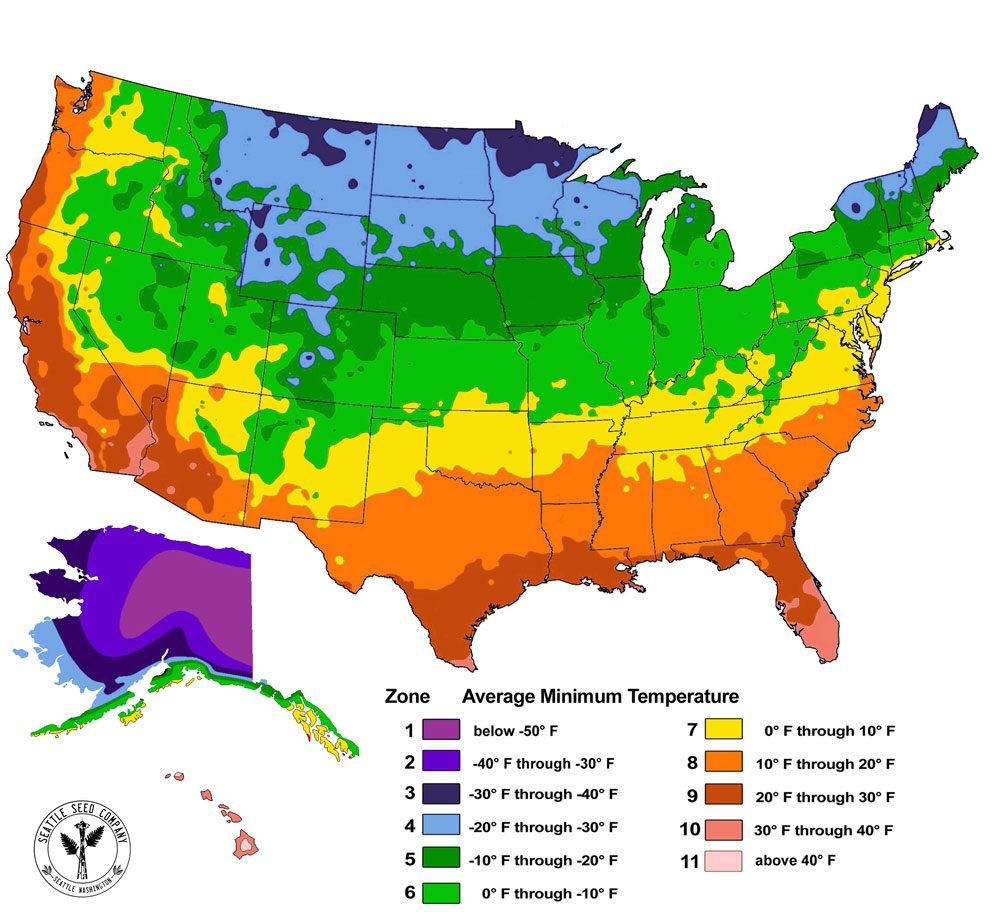
It grows best in zones 4 to 10. This includes the Eastern United States
It beautiful plumes turn a coppery russet color in the fall and remain that way long into the winter.


How and Where To Put It in Your garden
It depends how big your garden is and to what height fountain grass grows. The tall fountain grass which are the varieties are:
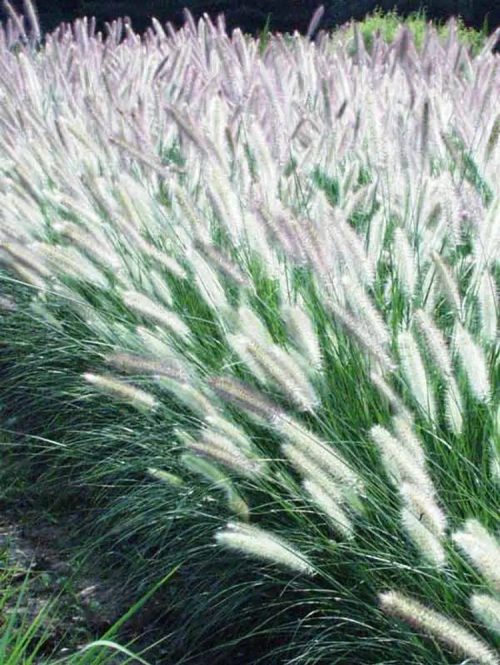
Pennisetum alopecuroides ‘Foxtrot’ formerly called P. alopecuroides ‘Japonicum’ is one of the largest and fastest growing fountain grass. The slightest breeze causes an elegant movement hence the name “fox trot”.
This is one of the tallest and fastest growing varieties of the fountain grass family. It grows up to 4 feet tall, 5 feet with flower. Plant them 4 feet apart because this grass is a giant. They are deer resistant and long blooming.
For all you urban dwellers out there they can be planted in a 4 to 5 gallon container.
Not prone to reseeding so I wouldn’t worry that they are invasive or not.
They love full sun to light shade, so I would think you could plant them anywhere in your garden, even in rocky and sandy soil.
Pennisetum setaceum ‘Rubrum’ or Purple Fountain Grass
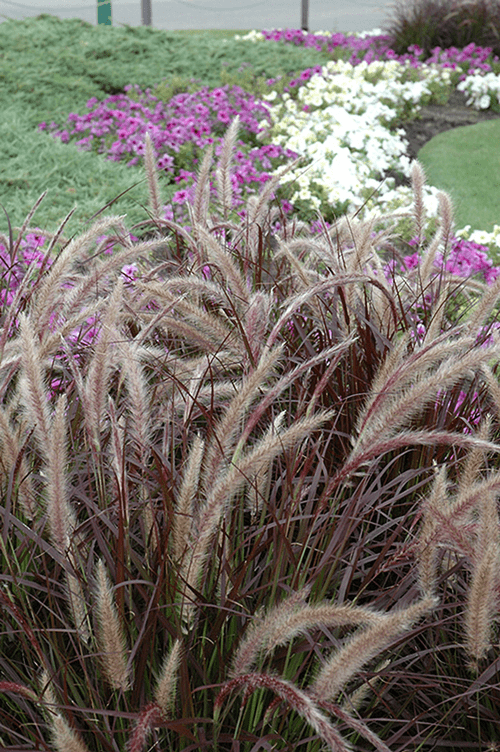
This particular fountain grass grows up to 4 feet with a width of 3 feet and is the most dramatic. It has plumes of red flowers attached to plum purple leaves. It blooms from mid-summer to mid fall and is deer resistant. It needs full sun and is drought tolerant.
It does not mind an urban environment and can be planted in suitable container.
While doing research on this article about fountain grass I have been reading that it is toxic and invasive. Certain states will not allow it within their borders and it may be or may not be toxic to animals. The only thing I can say is if you want to plant a certain grass in your garden do some research on it. There are so many opinions about this that I think that would be the safest way to go.
Don’t get this lovely fountain grass mixed up with Purple Love Grass
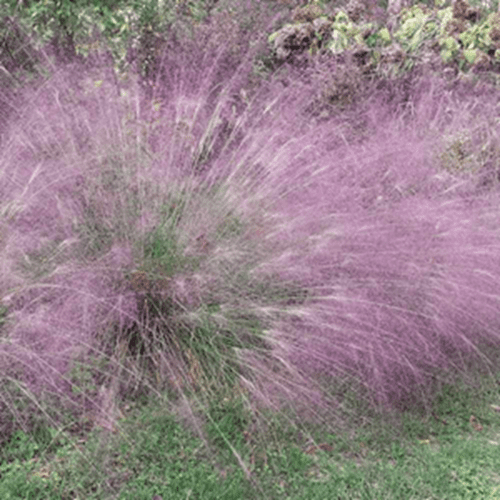
Fountain Grass grows from 12 inches to 5 feet high. It depends on the variety. I just think that with a little common sense while planting these wonderful grasses that you will do just fine. If you want to do a little research on where each variety originated from that will give you some clue on how to take care of your special variety of fountain grass.
Other kinds of Grasses for your viewing pleasure
Carex oshimensis ‘Evergold’
Carex oshimensis ‘Evergold’, or Evergold Sedge, is a Japanese grass known for its striking variegated foliage. Its slender, arching leaves are dark green with a broad central stripe of bright yellow, creating a beautiful contrast. This grass is a shade-lover and can thrive in both dry and wet soil conditions, making it versatile for various garden sites. Its low-growing habit and delicate texture make it an excellent choice for edging paths or for growing in containers.
Cortaderia selloana ‘Pumila’
Cortaderia selloana ‘Pumila’, commonly known as Dwarf Pampas Grass, is renowned for its impressive, fluffy white flower plumes that rise above the foliage in late summer. This grass is hardy, drought-resistant, and can withstand the harsh winters of the northeastern U.S. Its majestic size and dramatic presence make it a perfect focal point in the garden.
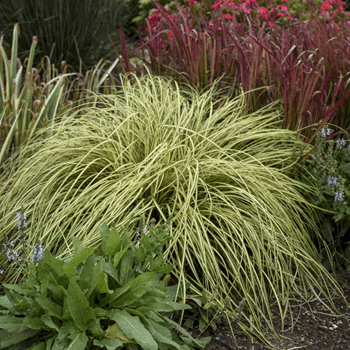
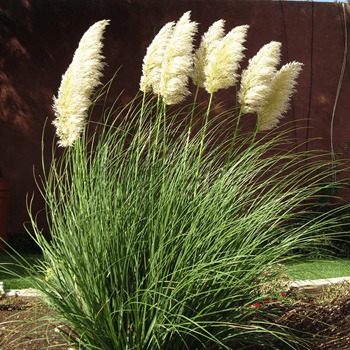
Creating a diverse and captivating garden is achievable with the addition of these ornamental grasses. Each offers unique visual appeal and can thrive in the region’s varied climate and soil conditions. Pennisetum alopecuroides ‘Hameln’, Carex oshimensis ‘Evergold’, and Cortaderia selloana ‘Pumila’ are excellent options to consider for an interesting, low-maintenance, and beautiful garden.
Conclusion
I chose the northeastern United States because that is where I live, I am also a city-dweller so I am quite sure that these particular grasses will thrive in a city atmosphere.
I love ornamental grasses I think they add a bit of drama to any garden. There is nothing like seeing them sway in the breeze with their beautiful colors shining in the sun.
Thanks for reading the whole article and I hope you get as much joy out of these grasses as I do.

Jackie Buckley
jacqueline@littlefoot.xyz
“Unraveling the Magic of Fall: Leaves, Colors, and Why You Should Stop Raking”
Prepare to be transported into the mesmerizing world of fall foliage, where nature’s paintbrush turns the ordinary into the extraordinary. Contrary to popular belief, this spectacular transformation isn’t a worldwide phenomenon – it’s a gift reserved for the deciduous trees found in eastern North America, western Eurasia, and northeastern Asia. If you’re an Eastern US resident, chances are you’ve marveled at these wondrous trees in your own backyard, from the graceful birches to the stately oaks.
Now, let’s dive into the intriguing world of leaves and their secrets. Have you ever wondered who came up with the idea of raking leaves? Some meticulous clean freak, presumably. I remember those days when all the neighbors meticulously raked their lawns and created towering leaf piles. The joy of children leaping into those leafy mountains is a cherished memory. And let’s not forget the autumn ritual of burning those piles, filling the air with a scent that defines the essence of fall.
But times have changed, and here’s a secret: you don’t need to tidy up those fallen leaves anymore. Leaving them alone is the new mantra, and here’s why.
Those fallen leaves on your lawn are more than just a scenic carpet. They naturally transform into mulch, silently suppressing weeds while enriching the soil as they gracefully decompose. In the winter, they become a haven for small critters like frogs, lizards, birds, and beneficial insects, who repay your hospitality by keeping pests in check and enhancing pollination in your garden and lawn. It’s heartwarming to think that you provide shelter on those chilly winter nights.
Don’t toss those leaves in the trash; add them to your compost pile. Compost, the gardener’s gold, can be used as mulch for your trees and plants, protecting them from the scorching summer heat and retaining vital moisture in the soil.
Smart gardeners know that raking leaves off their gardens is a no-no. Those decaying leaves are a feast for soil microorganisms, leading to happier, healthier plants. So, it’s time to rethink your leaf-raking strategy.
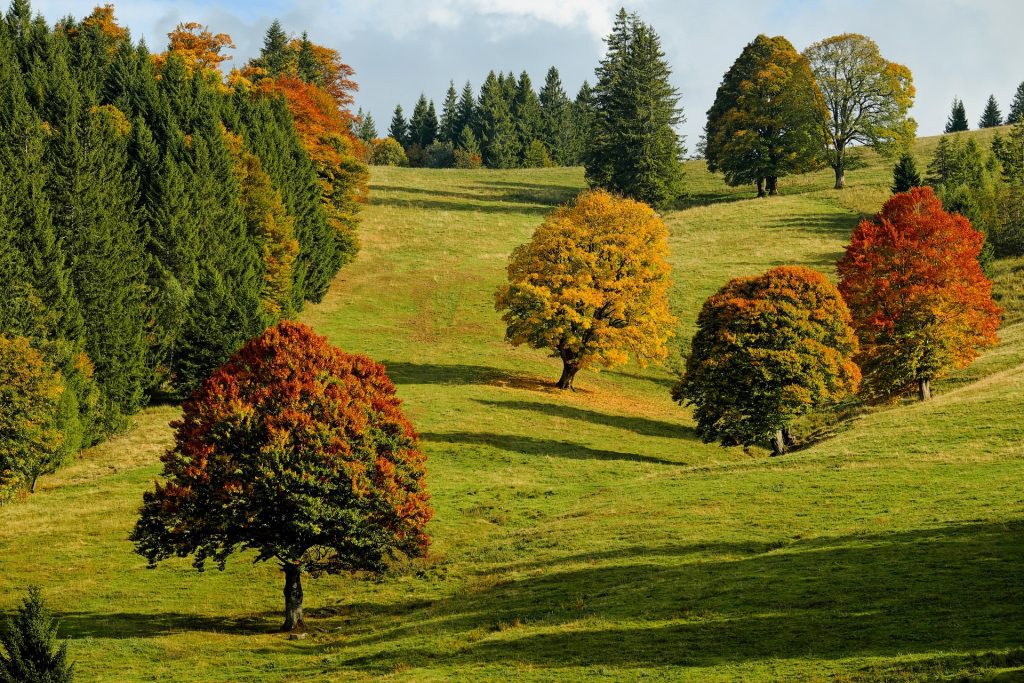
Now, let’s unlock the mystery of why leaves change color. Trees are not just passive giants; they’re dynamic, reacting to the world around them. As spring unfolds, their leaves begin as a vibrant light green, thanks to a pigment called chlorophyll. Chlorophyll is nature’s solar panel, helping leaves absorb sunlight and convert it into energy through photosynthesis.
When autumn arrives, trees initiate a grand transformation. They break down chlorophyll, revealing the nitrogen and other nutrients in the tree. These vital elements are sent down to the roots for storage during the winter. As the green chlorophyll departs, the leaves adorn themselves with warm hues of yellow and orange, thanks to carotenoids, natural protectors, and antioxidants.
But the reds, oh, the reds! They’re not present in all trees or year-round. A special red pigment, anthocyanins, comes to life as leaves begin their colorful display. This red magic is influenced by the weather – it craves sunny days and crisp nights to truly shine.
After absorbing all the nutrients, trees go through one last active phase called shedding. Regardless of whether the leaves appear dead or alive, they gracefully flutter to the ground, painting the earth with their vibrant colors.
The weather holds the key to the intensity and brilliance of fall foliage. It’s a subject of endless debate, but one thing is clear: those captivating red hues demand sunlight and cool nights. In regions where autumn reigns, windy days can strip trees of their colorful glory prematurely. For those lucky enough to reside in these zones or those who plan to visit, weather forecasts become a valuable tool.
If you’re itching to witness the breathtaking fall foliage, consult the Farmers’ Almanac’s fall color map, which provides insight into what to expect based on reports from their readers.
https://www.almanac.com/fall-foliage-color-map-when-peak-foliage
In conclusion, let’s make a pact to stop raking those enchanting leaves, let nature work its magic, and embrace the beauty and wonder of fall in all its colorful glory. It’s a season like no other, and the leaves on your lawn are more than just debris; they’re part of a natural masterpiece.
Sincerely,
Jackie Buckley
The Pumpkin: A Fall Classic for Avid Gardeners
 Image by
 Embrace the Bounty of Fall: Urban Gardening Tips for City Dwellers
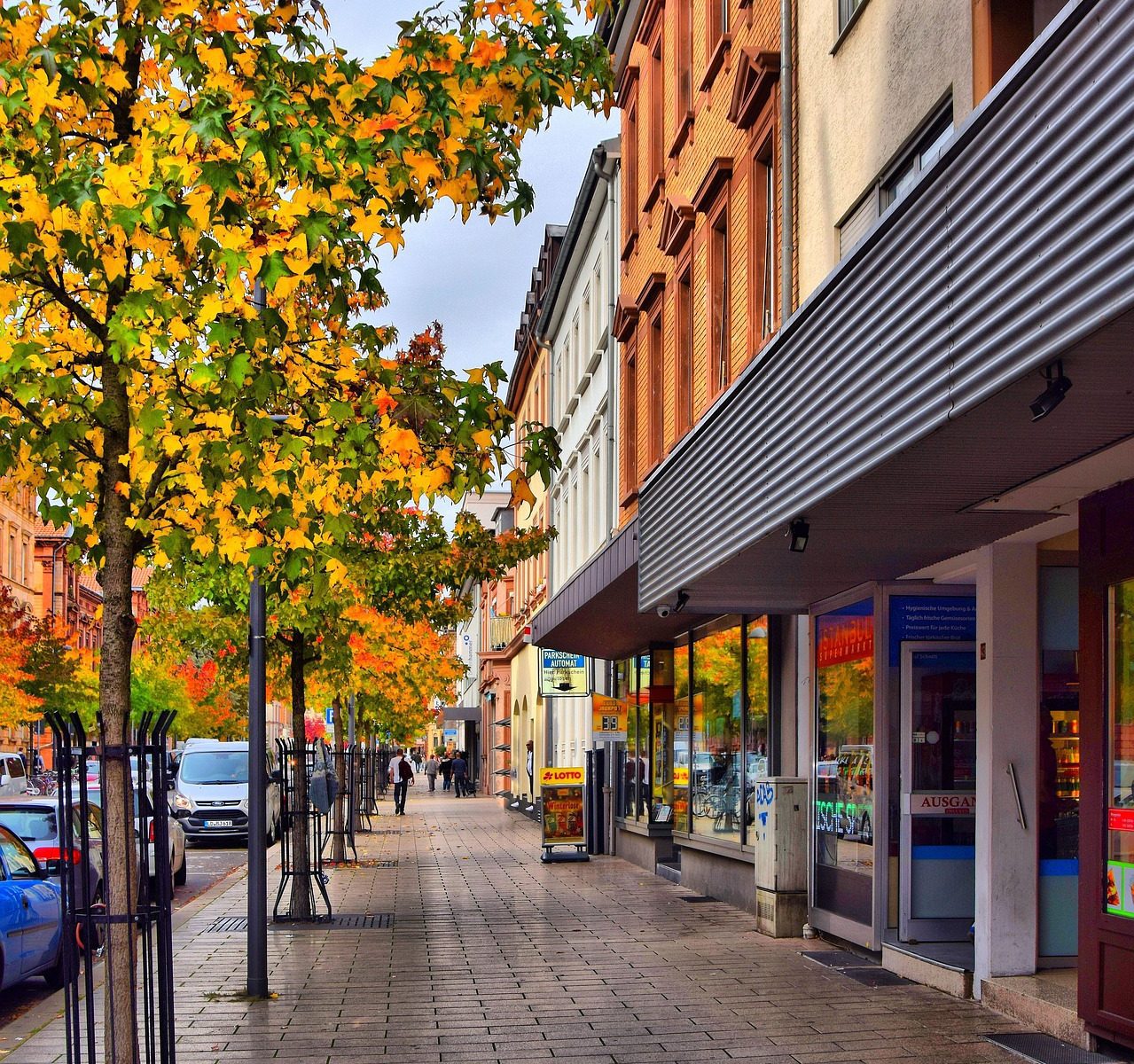
Urban Gardening Tips for the Fall Season
As you look outside and watch the leaves begin to change and gear up to say your goodbyes to summer, you may be wondering what to do now.
Continue reading “Embrace the Bounty of Fall: Urban Gardening Tips for City Dwellers”
Nurturing Vibrant Urban Gardens: Unveiling the Secrets of Silt Soil
Nurturing Vibrant Urban Gardens: Unveiling the Secrets of Silt Soil
Continue reading “Nurturing Vibrant Urban Gardens: Unveiling the Secrets of Silt Soil”
Urban garden soil
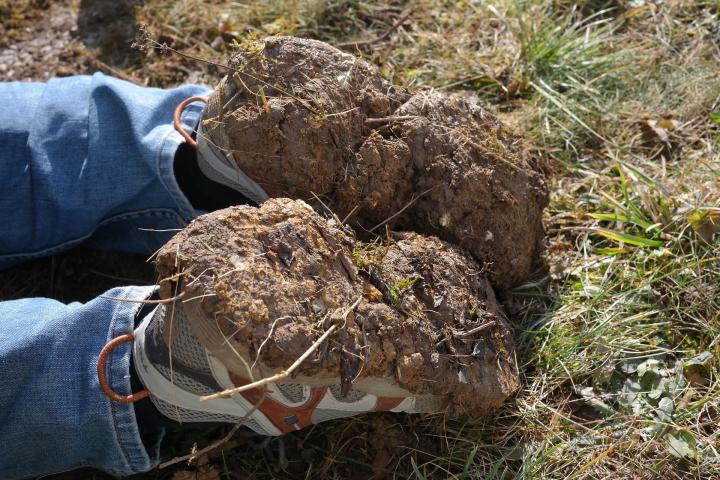
Nurturing Urban Gardens: A Guide to Choosing the Right Garden Soil
Introduction
Urban gardening is a thriving trend that’s transforming concrete jungles into green oases, one plant at a time. As more and more city-dwellers embrace the joys of cultivating their own gardens, the importance of understanding soil quality cannot be understated. The foundation of a successful urban garden lies in the soil you choose.
In this guide, we’ll walk you through the essential aspects of selecting the right soil for your urban garden, helping you turn even the smallest plot into
a flourishing paradise.